Call the Horse Lucky

By Juanita Havill; Illustrated by Nancy Lane

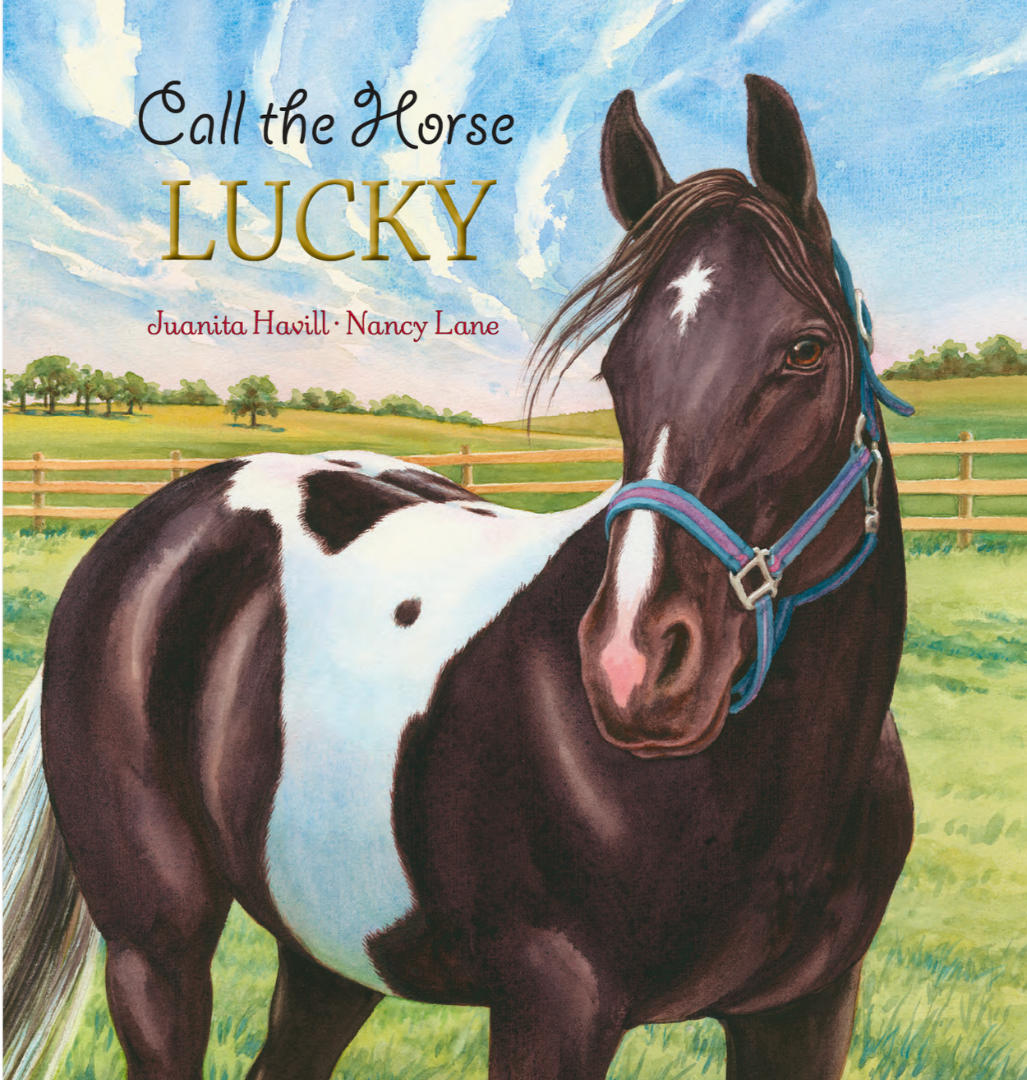
Book cover titled 'Call the Horse Lucky' featuring a black and white paint horse with a blue halter standing in a grassy field with trees and a wooden fence under a blue sky with clouds.

A story beautifully told and illustrated that will go to the heart of horse lovers. 

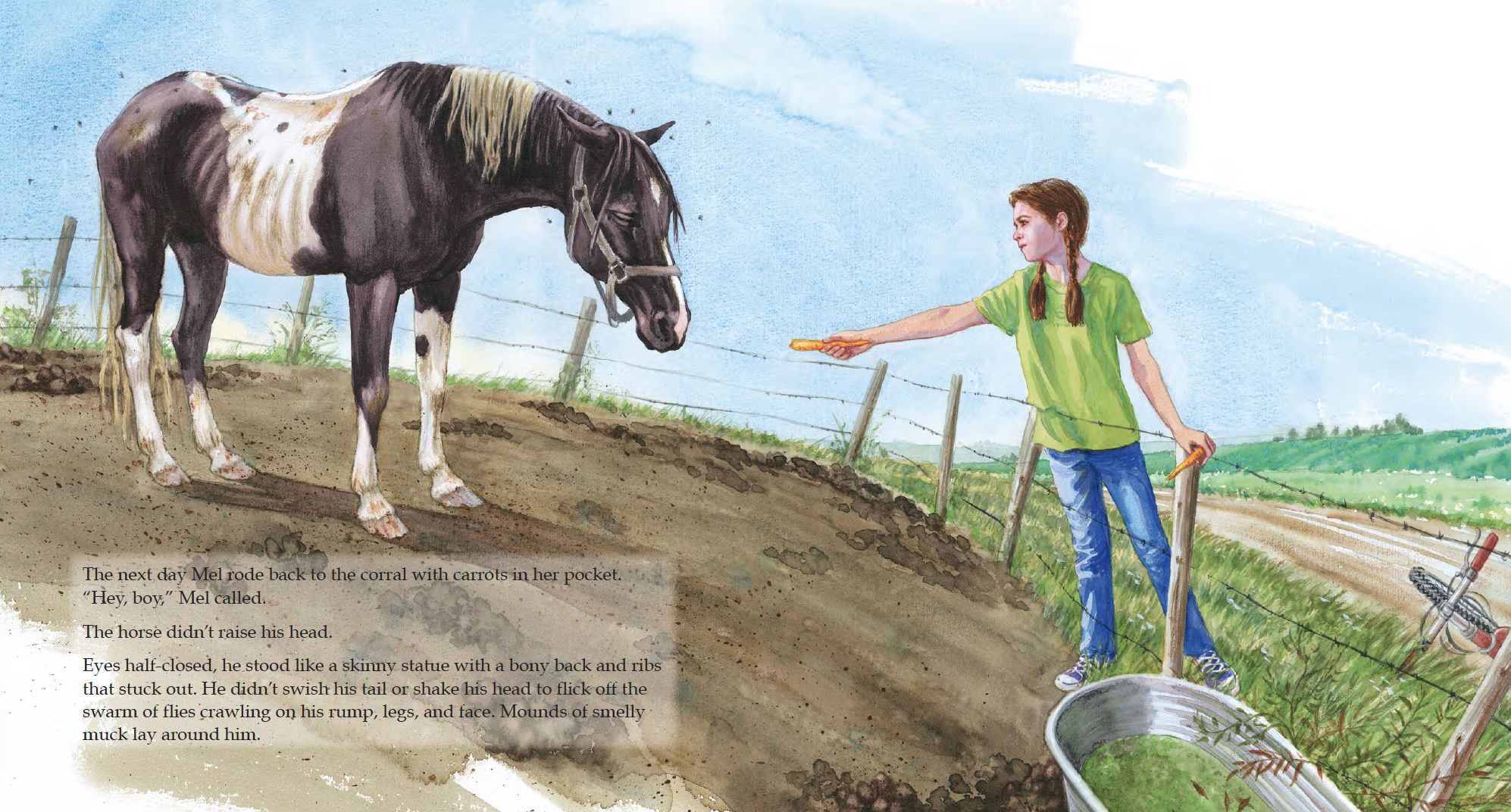
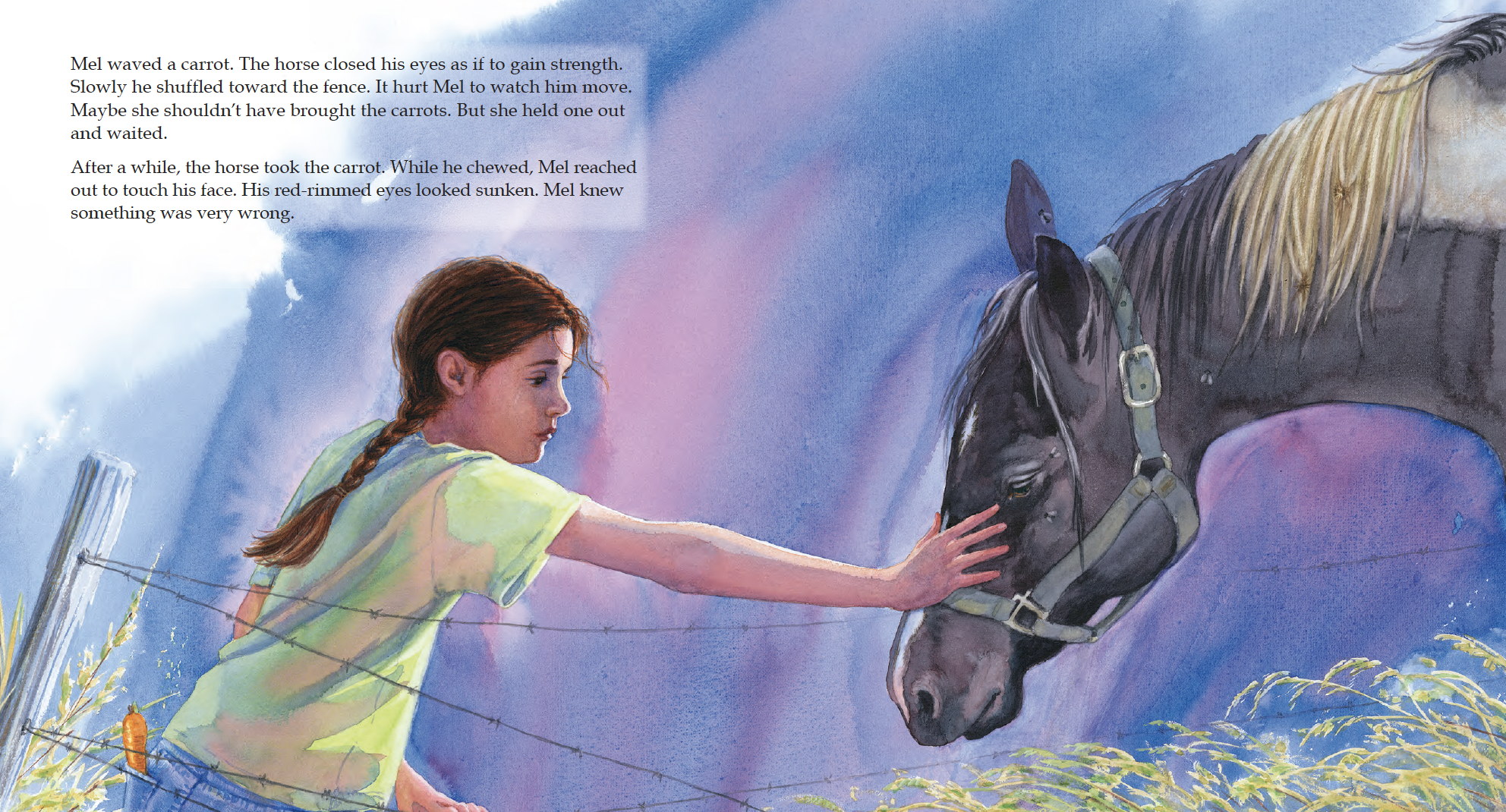
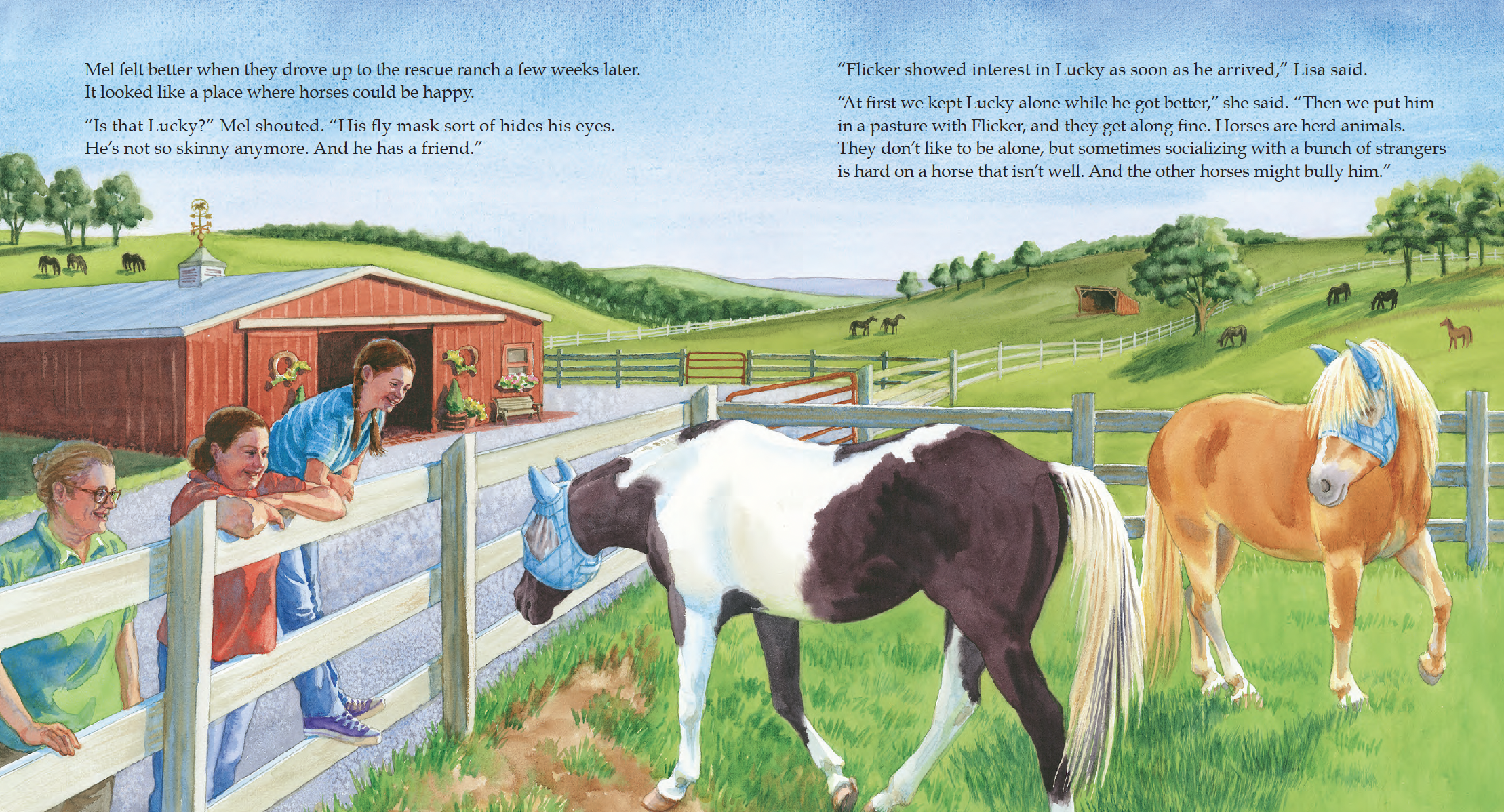
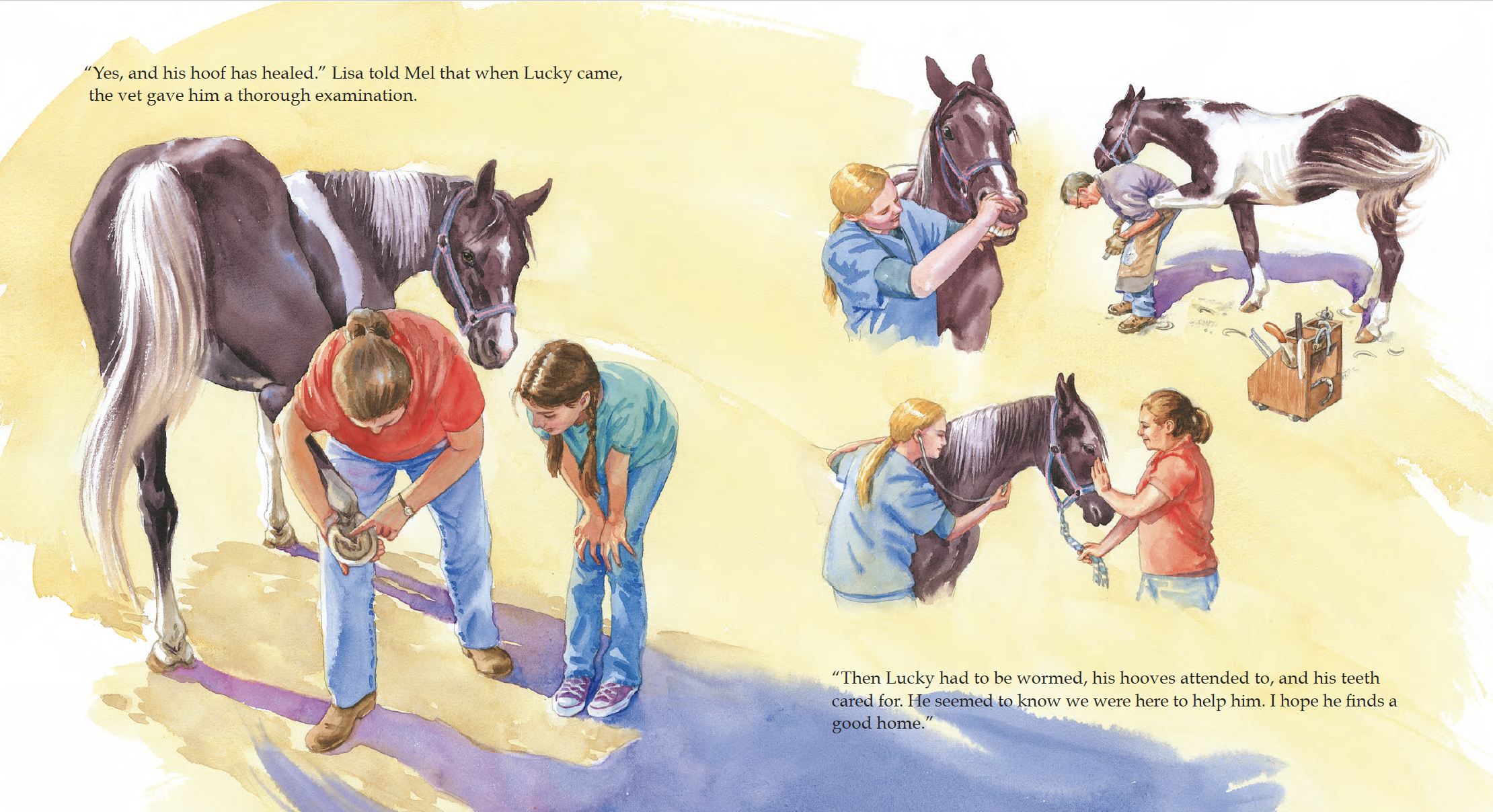
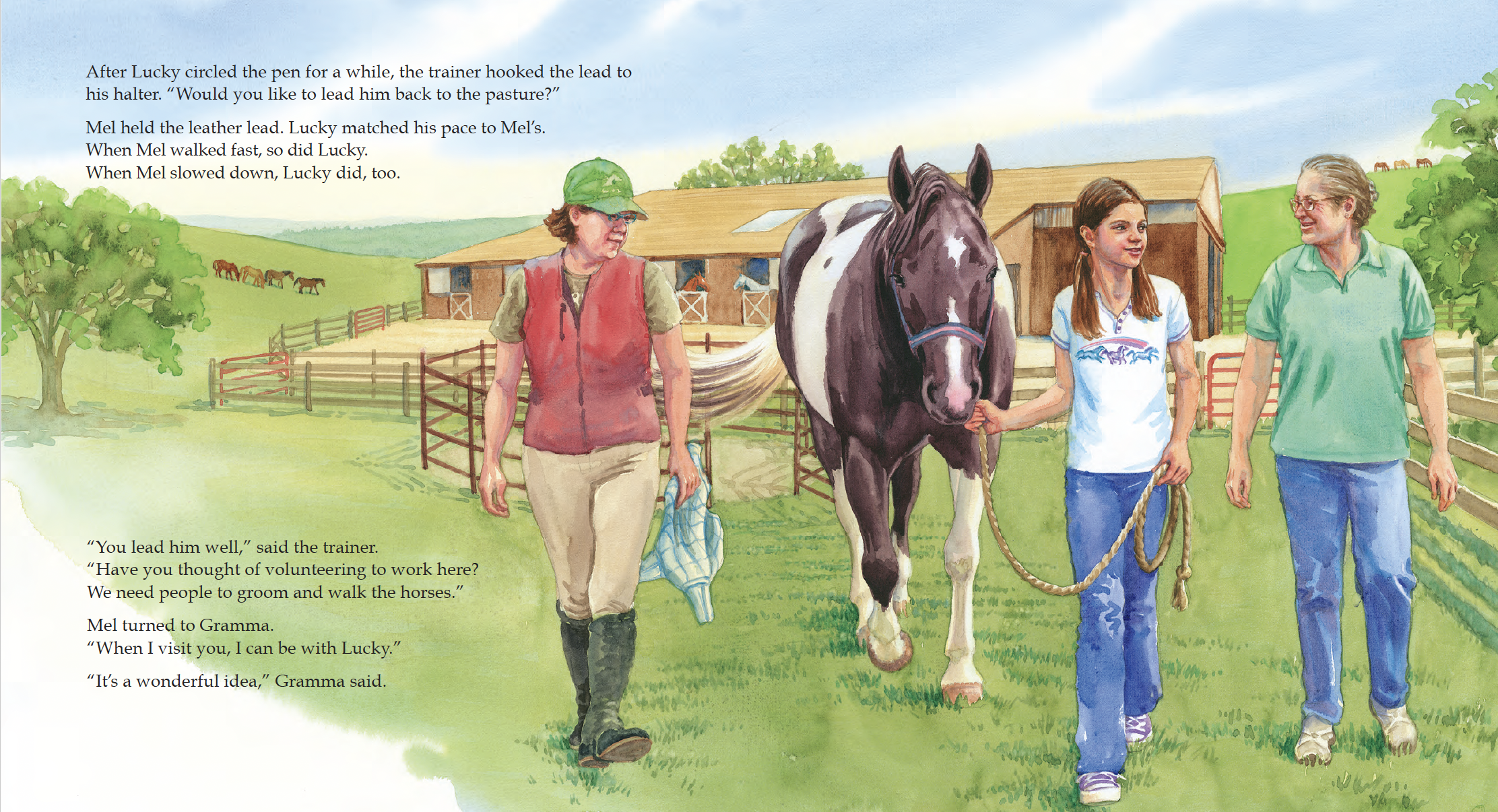
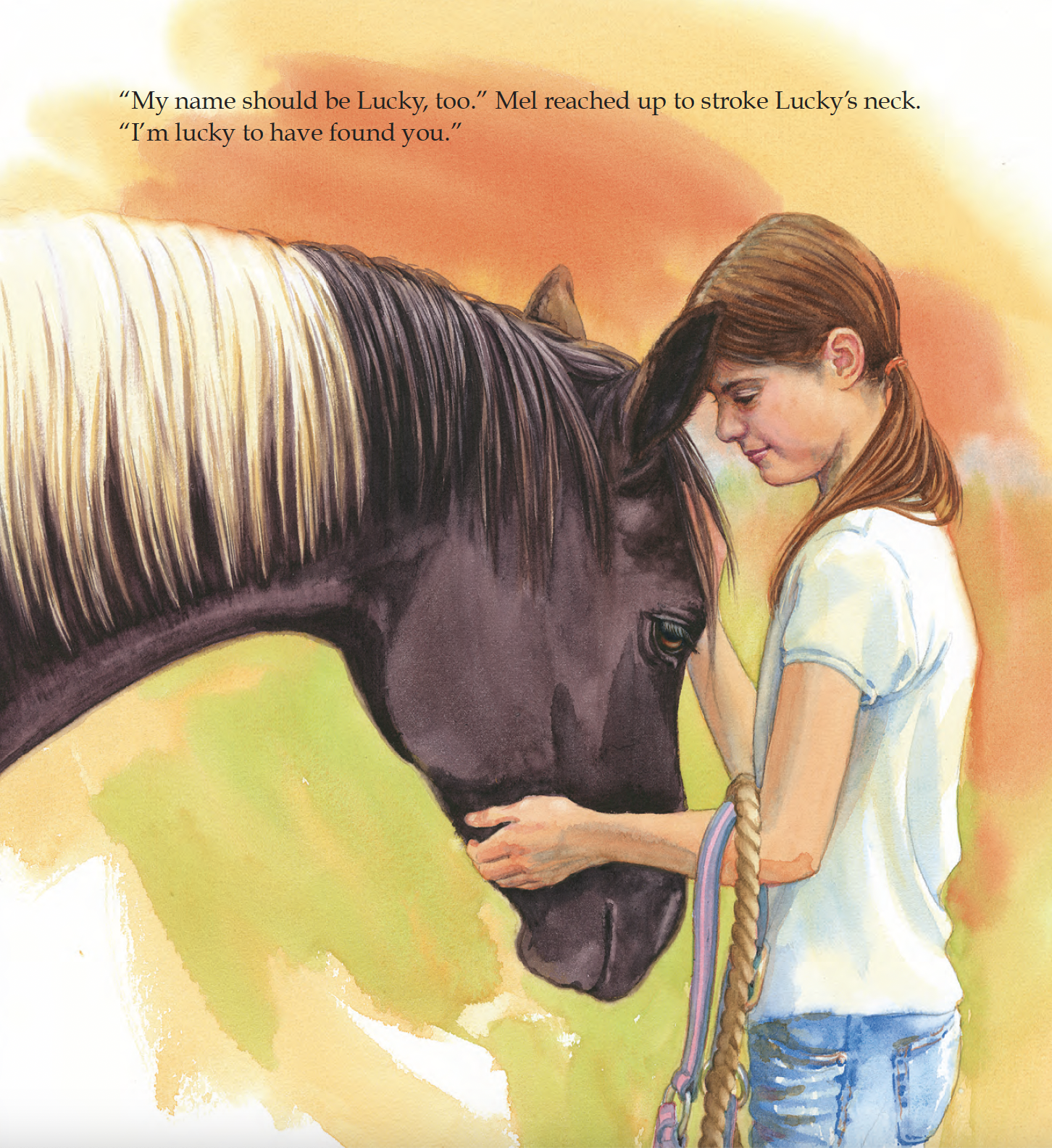
Call the Horse Lucky presents the issue of horse neglect in simple, straightforward language and compelling illustrations that enable young readers to identify with the girl, Mel, and the horse, Lucky. When visiting her grandmother, Mel discovers a neglected horse. Moved by the sight of his sad, glazed eyes and protruding ribs, Mel initiates a rescue; the horse is transported to a rescue ranch, where Mel learns about horse care. She comes to realize that since she lives in town and her family can’t afford the expense of a horse, she can’t adopt Lucky. When Lucky recovers and moves to a horse therapy ranch, Mel is thrilled that she can volunteer there and continue to bond with the horse she helped save.

Call the Horse Lucky is for children from ages five through their teens. The reader learns that, although they may not be able to own a horse, they can still interact with horses in other ways, including volunteering at rescue or therapy facilities. The final page offers factual, accurate, and comprehensive information about saving and caring for horses.

  • Horses, Animal Welfare

  • 2010

  • 24 Pages

  • Hardcover

  • Kindergarten, First Grade, Second Grade, Third Grade

  • 094071910X

  • 9780940719101

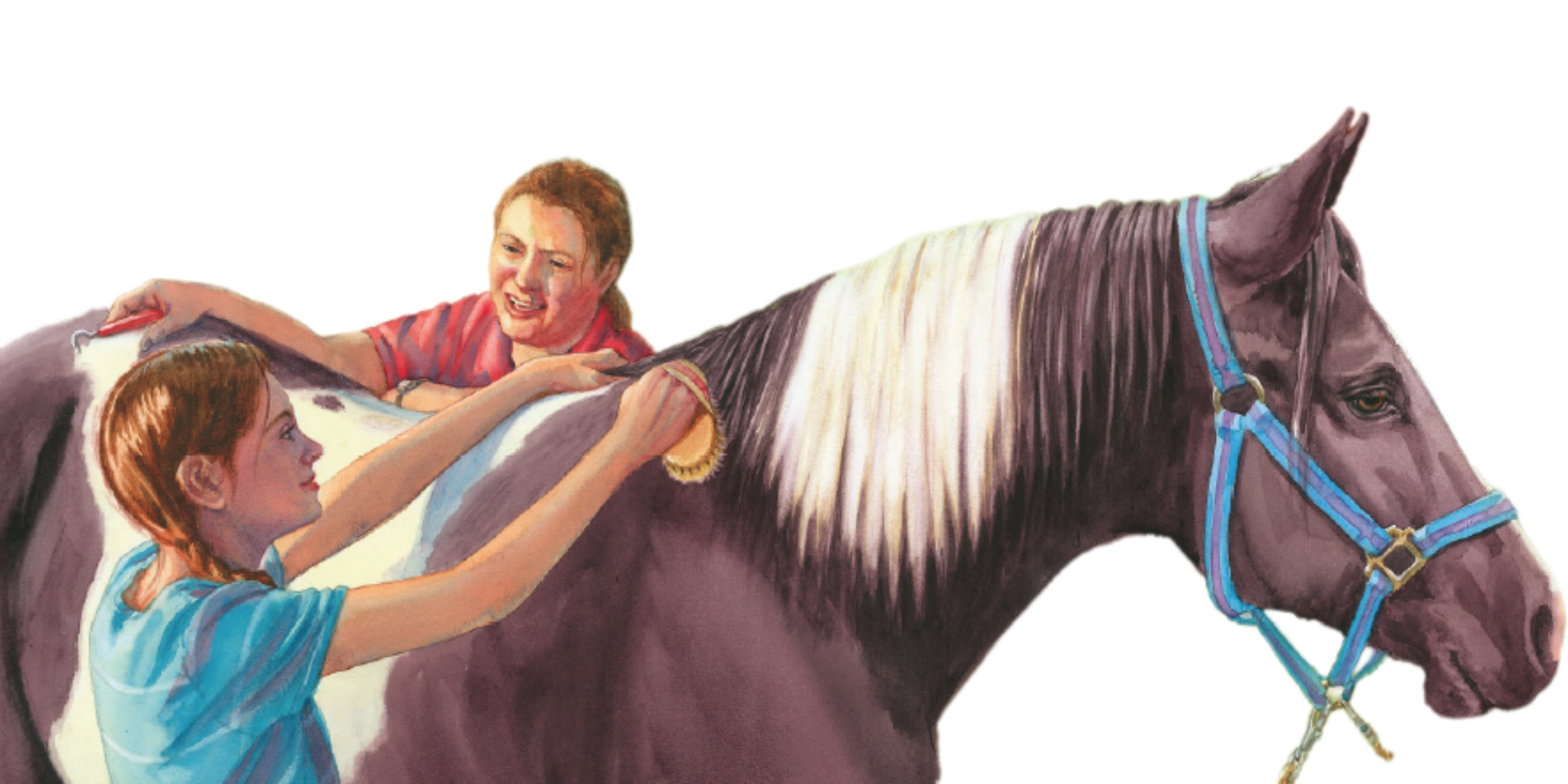
Two girls grooming a horse with a brush, one standing and another sitting on the horse's back, in a painting style.

Reviews

  • Kirkus Reviews

    “A surprisingly effective story about horse rescue. While riding bikes in the country, Mel and her grandma see a thin, neglected-looking horse alone in a barren field. Mel returns the next day, seeing that the horse limps and appears to be suffering, she convinces her grandma to call animal control. A few weeks later, the horse is rescued and taken to a farm, where he is properly fed and given veterinary and farrier care. Mel wishes she could adopt him, but she realizes, without angst, that her family doesn’t have the resources. Instead, Lucky goes to a therapeutic riding center, where Mel volunteers so she can continue to see him. The horse’s neglect and recovery are related without melodrama or blame, and the story shows clearly that Mel can make a difference using appropriate channels. Consciously didactic but not offensively so, the story avoids the traps so many other well-meaning animal-rescue tales fall prey to. The watercolor illustrations are just as straightforward and honest as the text, and, given the economy, this book may well see a lot of use.”

  • School Library Journal (Kristine M. Casper, Huntington Public Library, NY)

    “(K-Gr 3) A girl helps a neglected horse in this heartfelt picture book about animal rescue. Bike riding in the country with her grandmother, Mel sees a despondent pinto alone in a corral. When she realizes that the horse is too skinny and moves painfully, her grandmother calls the Humane Society. Lucky, as Mel names him, is taken to a veterinarian and ultimately to a horse therapy ranch where he will live and work. Havill’s conversational text keeps the story moving along swiftly without being hindered by a lot of detail, thus keeping the didacticism at a minimum. Lane’s watercolor paintings deftly convey the emotions of both the horse and Mel. An afterword discusses how to help neglected horses and includes websites for further information. A solid choice for use in humane-education programs or to begin a dialogue about the proper treatment of these animals.

  • Dr. Patricia Frederick (Veterinarian and Artist)

    “Call the Horse Lucky is a gift to all readers. As an equine veterinarian for many years and dedicated to teaching correct animal husbandry, I applaud this book. The story, the husbandry discussed, the solutions to a problem, the economic values, and the information in the epilogue are all really correct and to the point, in my opinion. The illustrations/paintings are an additional gift, and I felt as if the people were all someone I had met in my practice.”